Reading the Art Market Through Luxury: What Q1 Earnings Reveal
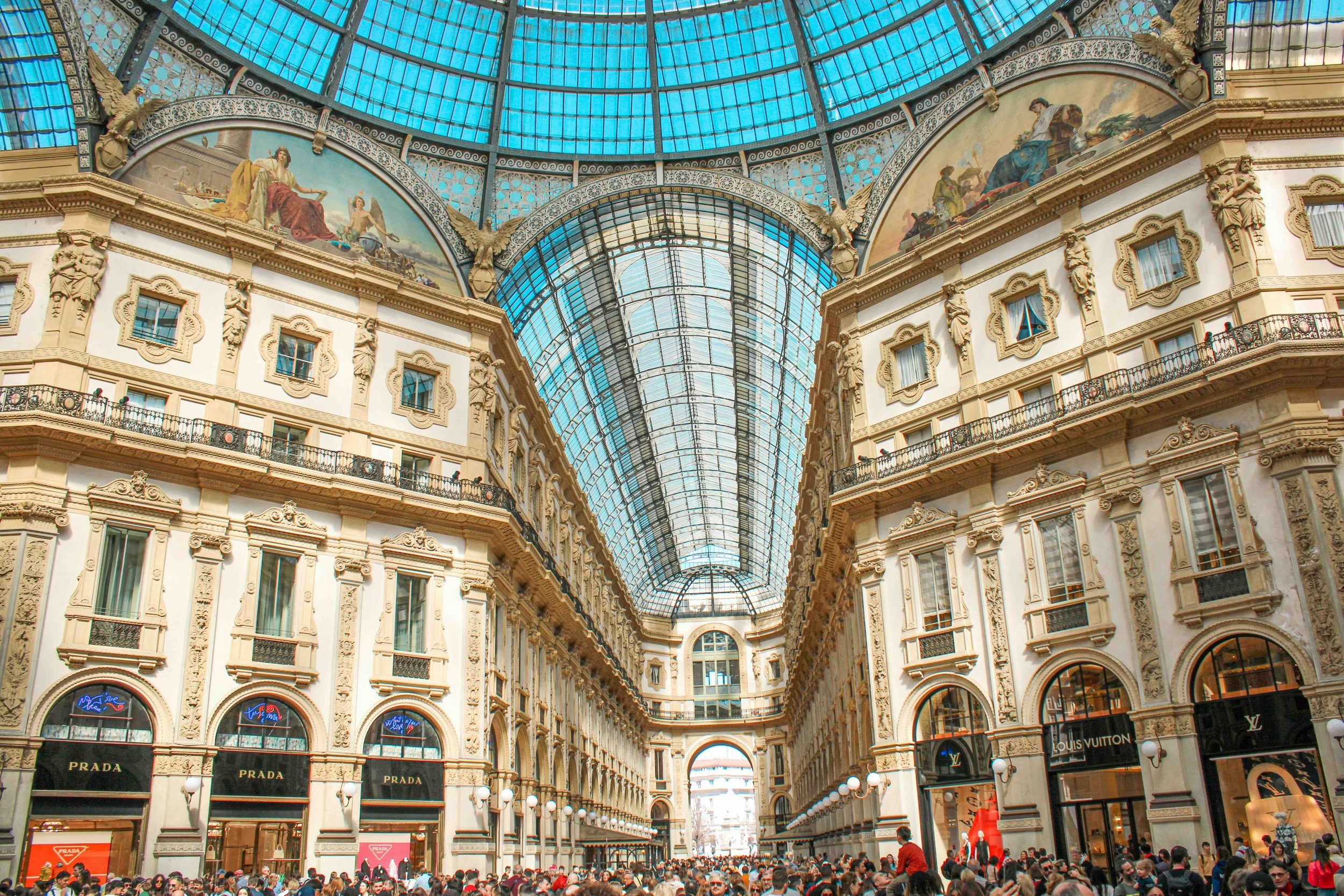
Photo by Abstracts photo on Unsplash.
There is an increasing tendency to conflate art and luxury. Both connote scarcity, taste, status and discretionary wealth. Traditionally, however, the two markets have operated according to different logics: fine art is shaped by provenance, cultural significance and market validation, while luxury is driven by brand, desirability and craftsmanship. Their points of convergence are twofold. First, both sectors are animated by the collecting, investing and lifestyle decisions of high-net-worth and ultra-high-net-worth clients. Second, both are subject to increasing legal and regulatory scrutiny, particularly as high-value objects move across borders, through private channels and within increasingly complex ownership structures.
It is at these points of convergence that the Q1 2026 earnings of LVMH, Kering, and Hermès become useful reading for those who advise on, invest in or transact within the art market. Luxury earnings offer one of the more immediate public indicators of how wealth consumers are behaving. For the art market, where transactions are often private, opaque and slower to register in public data, luxury can function as an early signal.
The Art Market's State of Play
The Art Basel and UBS Global Art Market Report 2026 found that global art sales increased 4% year-on-year to an estimated USD 59.6 billion in 2025, ending two consecutive years of declining values. The recovery was led by renewed activity at the high end, with sales of works priced above USD 10 million rising 30% in the auction sector.
Dealers remained the preferred channel for high-end collectors, with 30% choosing to buy directly from a dealer rather than an art fair (15%) and direct from artists (20%). Yet the global market remains 9% below its 2023 level, and the recovery has been uneven across regions, segments and price points.
The auction sector tells a similar story of selective recovery. According to Artnet’s The Intelligence Report, fine-art auction sales rose 13.3% to USD 11.7 billion in 2025. Auction activity also broadened significantly, with 437,626 fine art lots changing hands – the highest annual figure in a decade and 7.5% higher than in 2024. More works are moving through the market, even as average prices at the mid-tier remained subdued.
One particularly telling shift is the fall in private sales at auction houses, which has declined by 5%. This reverses patterns seen during the more uncertain market conditions of 2024, when sellers often preferred discretion over the risks of public auction. The shift suggests some sellers are again prepared to test competitive auction dynamics.
At the same time, however, the very top of the market is moving further behind closed doors. In an episode of The Art Angle for Artnet, senior reporter Katya Kazakina also identified the proliferation of invitation-only auctions and bespoke sales formats, hosted by the major houses and well-connected independent figures, for the small cohort of buyers capable of transacting at around USD 100 million and above. Christie's, Sotheby's, and newer platforms like Fair Warning have all experimented with these discreet, highly curated sales experiences designed to attract ultra-high-net-worth collectors.
Commercial galleries are also adapting. New York-based Levy Gorvy Dayan recently announced a new auction platform designed to facilitate their sales outside the traditional auction-house environment. The model appears intended to combine the gallery’s curatorial and client-led approach with the urgency, pricing tension and competition structure of auction. It is a reminder that the boundary between dealer, adviser and auctioneer is becoming increasingly porous.
The picture that emerges in early 2026 is not one of broad-based exuberance. Rather, the art market’s recovery is concentrated at the upper end, dependent on exceptional supply, and increasingly mediated through channels that sit outside the public record.
The Luxury Earnings Read
The Q1 2026 luxury earnings are useful because they show, in real time, how affluent consumers are responding to macroeconomic and geopolitical pressure. For the art market, they are especially relevant in categories such as jewellery and watches, where luxury and art collecting habits often overlap.
The three French conglomerates – LVMH, Kering, and Hermès – remain amongst the most reliable publicly available barometers of high-net-worth and ultra-high-net-worth sentiment in real time. Their earnings calls distil what wealthy consumers are doing with their money across key geographies.
In the week of 14 April 2026, the major luxury houses reported that the US-Israel and Iran war had interrupted the recovery that the sector had been anticipating. LVMH reported total revenue of €19.1 billion for Q1 2026, a 6% decline, though organic growth remained positive at 2%. LVMH CFO Cécile Cabanis observed that once the conflict began, there was “a shortfall and a deterioration of demand between 30% and 70%” across certain malls and business lines.
Kering's position was more precarious: Gucci posted a 14.3% revenue decline to €1.35 billion, with Middle East retail revenue falling 11% during the quarter. Hermès, while typically more resilient, reported that wholesale sales were hit by weaker concession-store activity, especially in the Middle East and in airports.
These results matter because, like the art market, the luxury sector is highly dependent on a relatively small group of wealthy consumers. Deloitte's Global Powers of Luxury 2026 reports that the luxury market is moving toward a relationship-driven model, shaped by cultural relevance, trust, and intimacy. The Business of Fashion and McKinsey & Company have similarly found that high-net-worth and ultra-high-net-worth consumers account for 30% to 40% of current luxury market spend and are expected to drive 65% to 80% of global market growth through 2027.
This has a further implication. Luxury conglomerates depend on the aspirational consumer – the buyer of an entry-level Louis Vuitton product, for example, rather than a bespoke Hermès commission – are more exposed to macroeconomic pressure than their brand positioning might suggest. The same is true in art. Markets that appear resilient at the top may conceal fragility beneath the surface.
What Luxury Reveals About Art
The luxury sector and the art market share a common dependency: the willingness of a relatively small, globally mobile population of wealthy individuals to deploy capital into non-essential, high-value purchases.
The Q1 luxury results suggest that this spending environment is under pressure. The Middle East, which has been one of the more consistent sources of demand growth across both luxury and art, has become a source of uncertainty. That matters for the art market because the spring auction season and major fair calendar follow closely behind the Q1 earnings cycle.
For sellers bringing significant works to market in 2026, the luxury results suggest a more selective buyer environment than the headline recovery figures might imply. Buyers may still be present, but they are likely to be more discerning about quality, price, provenance and timing.
There is also an important difference between luxury and art. The decision to purchase a handbag, watch or a piece of jewellery directly from an established luxury house generally involves less due diligence, less institutional validation, and a shorter transaction timeline than the acquisition of a museum-quality artwork. Luxury spending can therefore precede art market activity. It shows who is in the room, and whether they are in the mood to buy, before those signals fully appear in art sales data.
What to Watch Next
The convergence of art and luxury is not only commercial. It is also legal and structural. As both markets become more reliant on private clients, cross-border transactions, discreet sale formats and relationship-led access, the legal architecture around those transactions becomes important.
This is especially so where art, jewellery, watches and other high-value collectibles are used not merely as objects of enjoyment, but as stores of value, succession assets, collateral, gifts or reputation-bearing acquisitions. The more private and bespoke the transaction, the more important it becomes to understand who the parties are, where the money is coming from, whether sanctions issues arise, and how the asset will be owned, insured, transported and eventually transferred. The considerations that legal advisers, collectors, dealers, and institutions must bear in mind should work in parallel to the art market and the luxury sector.
Sanctions and Geopolitical Risk
Geopolitical instability does not only affect buyer sentiment. It can also affect whether a transaction can lawfully proceed.
In Australia, the Autonomous Sanctions Act provides the framework for sanctions imposed independently of United Nations Security Council resolutions. Sanctions may apply to individuals, entities and regimes connected with jurisdictions including Russia, Iran, North Korea, Belarus and Myanmar, among others. Contravening sanctions is a criminal offence and can lead to significant fines and imprisonment.
For art and luxury transactions, this means sanctions screening should not be treated as an afterthought. It should form part of the transaction process from the outset, particularly where a buyer, seller, intermediary, beneficial owner, shipping route, storage location or funding source has a connection to a sanctioned jurisdiction.
Practical steps include screening all relevant parties against the Department of Foreign Affairs and Trade sanctions list, recording the results of those checks, and retaining file notes even when no match is found. In a market where ultimately ownership may sit behind companies, trusts, advisers or family offices, it is also important to understand who the counterparty actually is.
Anti-Money Laundering (AML) and Counter-Terrorism Financing (CTF)
Anti-money laundering and counter-terrorism financing considerations are also becoming more significant. Luxury goods, particularly jewellery, watches, precious metals and stones, as well as fine art, are beginning to attract regulatory attention because of their high-value, cross-border and sometimes opaque nature.
In Australia, AML/CTF obligations do not currently apply to art market participants generally. However, from 1 July 20206, Tranche 2 reforms will extend obligations to dealers in precious metals, stones and products containing precious metals and stones, such as jewellery. For advisers who work across art, luxury and collectibles, the direction of travel is clear: enhanced due diligence, better record-keeping and more robust client identification processes are becoming part of the market infrastructure.
This is not only a compliance issue. It is also a market confidence issue. Where buyers are more selective and transactions are more private, trust becomes a form of value. A well-documented transaction, with clear provenance, verified counterparties and appropriate checks, is likely to be more resilient than one assembled informally.
Practical steps include assessing whether AML/CTF obligations apply to the business or transaction, verifying the identity of relevant parties, checking the source of funds where appropriate, reviewing important and export documents, and considering whether the Protection of Moveable Cultural Heritage Act1986 (Cth) may be relevant.
Where reporting obligations apply, businesses must also consider whether Suspicious Matter Reports or Threshold Transaction Reports are required, and ensure that relevant records are retained for the required period.
A More Integrated Market Requires More Integrated Advice
The art and luxury markets are converging around the same clients, the same geographies and the same forms of relationship-led access. But the convergence is not complete. Art carries different risks from luxury goods: provenance, authenticity, title, cultural heritage restrictions, artist rights, valuation volatility and reputational sensitivities all require specialist attention.
What the latest art market and luxury sector data shows is that wealth alone is not enough to sustain confidence. In a more selective, more private and more geopolitically exposed market, the quality of the transaction matters. That means careful structure, thoughtful documentation and legal due diligence that is integrated from the beginning, not added at the end.
Where art, luxury and capital intersect, clarity matters. Aurelian works with families, artists, collectors, consultants and cultural stakeholders to structure these relationships thoughtfully and with foresight. Get in touch with us.
The contents of this article are of a general nature only. They are not and should not be used as legal or financial advice.