Legal Lab Report
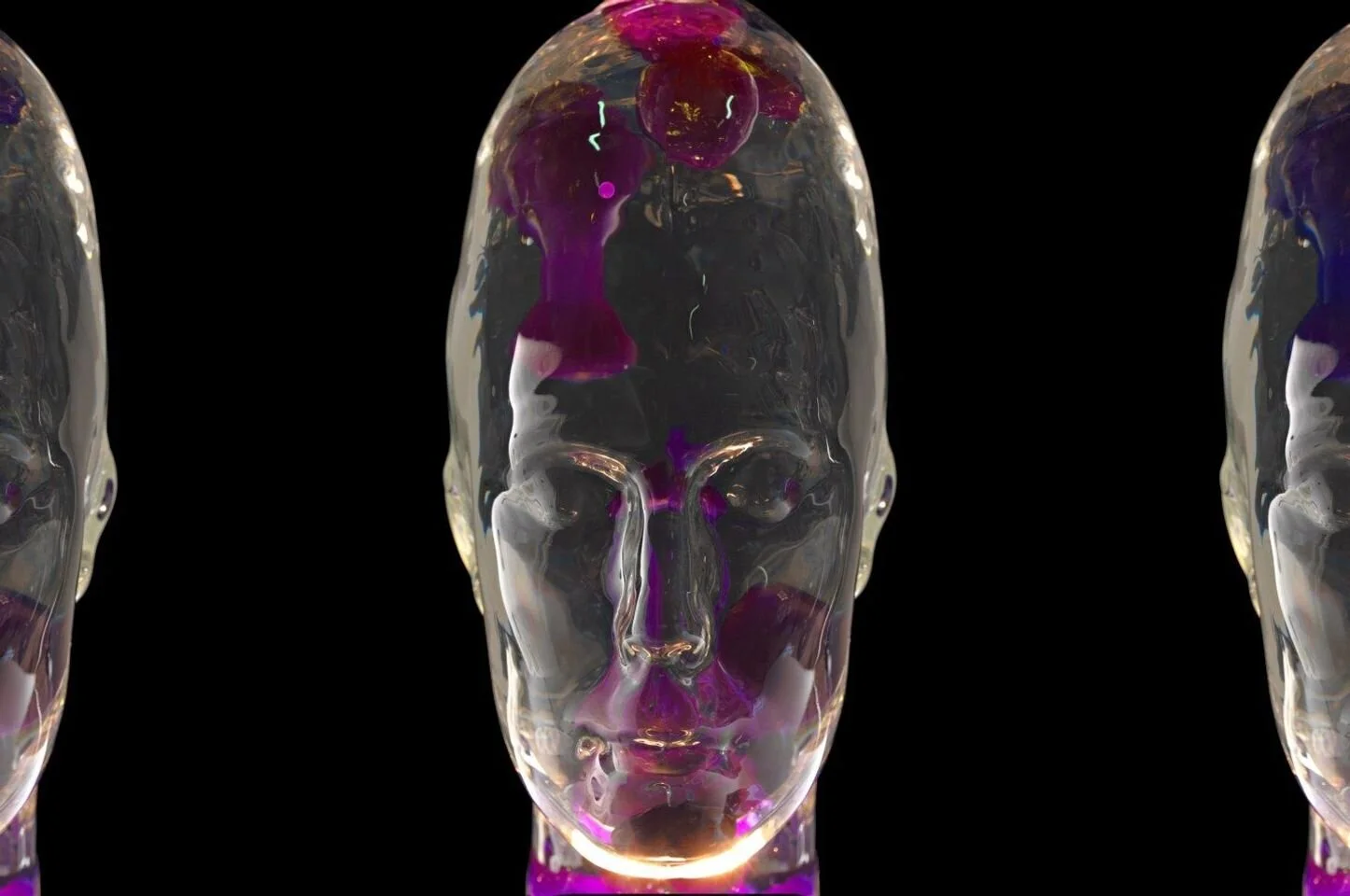
Jenna Sutela, I Magma, co-commissioned by Moderna Museet and Serpentine Galleries, 2019. Photo credit: Prallan Allsten/Moderna Museet.
The Serpentine Galleries’ Research and Development (R&D) Platform is a space where the institution’s ‘back-end’ (operations, protocols, in-built values) and ‘front-end’ (what it produces) are brought into experimental realignments. In today’s environment of hyper-production and accelerated change, arts organisations are in need of a reflexive space that allows for thoughtful and conscious advancement. Guest Work Agency Director and Founder Alana Kushnir has been engaged by the Serpentine Galleries as the Principal Investigator for the R&D Platform's Legal Lab.
In this report Alana discuss the ongoing work of the Legal Lab, the summit content and outcomes, and Guest Work Agency’s future plans with the Serpentine Galleries.
1. The Serpentine Galleries R&D Platform
For the past six years, the Serpentine Galleries’ have engaged artists to create works which have enabled the institution to extend its remit outside of the physical gallery walls in Hyde Park. These works are hosted on the Serpentine Galleries’ website, enabling a wide audience (who may not necessarily have the means or time to visit the Galleries’ location in London) to explore and participate in the works. The most recent work to be commissioned is Finnish-born Berlin-based artist Jenna Sutela’s I Magma app, a machine oracle performing divinations on our collective futures, created in collaboration with artist and creative technologist Memo Akten and poet and programmer Allison Parrish. These artistic experiments and the challenges they have presented have been a catalyst for a new thread of enquiry launched as the R&D Platform and led by the Serpentine Galleries’ CTO, Ben Vickers and R&D Community Manager Victoria Ivanova.
The Platform aims to provide a reflexive space for nurturing the evolution of organisational capabilities and to share knowledge and tools with the cultural sector as part of the Serpentine’s British Arts Council-designated role as one of the sector convenors on art and technology. One of the modules of the R&D Platform is the lab – a format for testing ideas and initiating conversations about art and its relationship with society for almost a quarter of a century.
The Serpentine’s long-standing Artistic Director, Hans Ulrich Obrist, has played a particularly important role in developing the context of curatorial practice. The newly established ‘labs’ of the R&D Platform are catalysts for identifying under-explored areas that are open to innovation and which present the possibility of high impact on future practices at the intersection of art and technology. The law is one such under-explored area which has been identified.
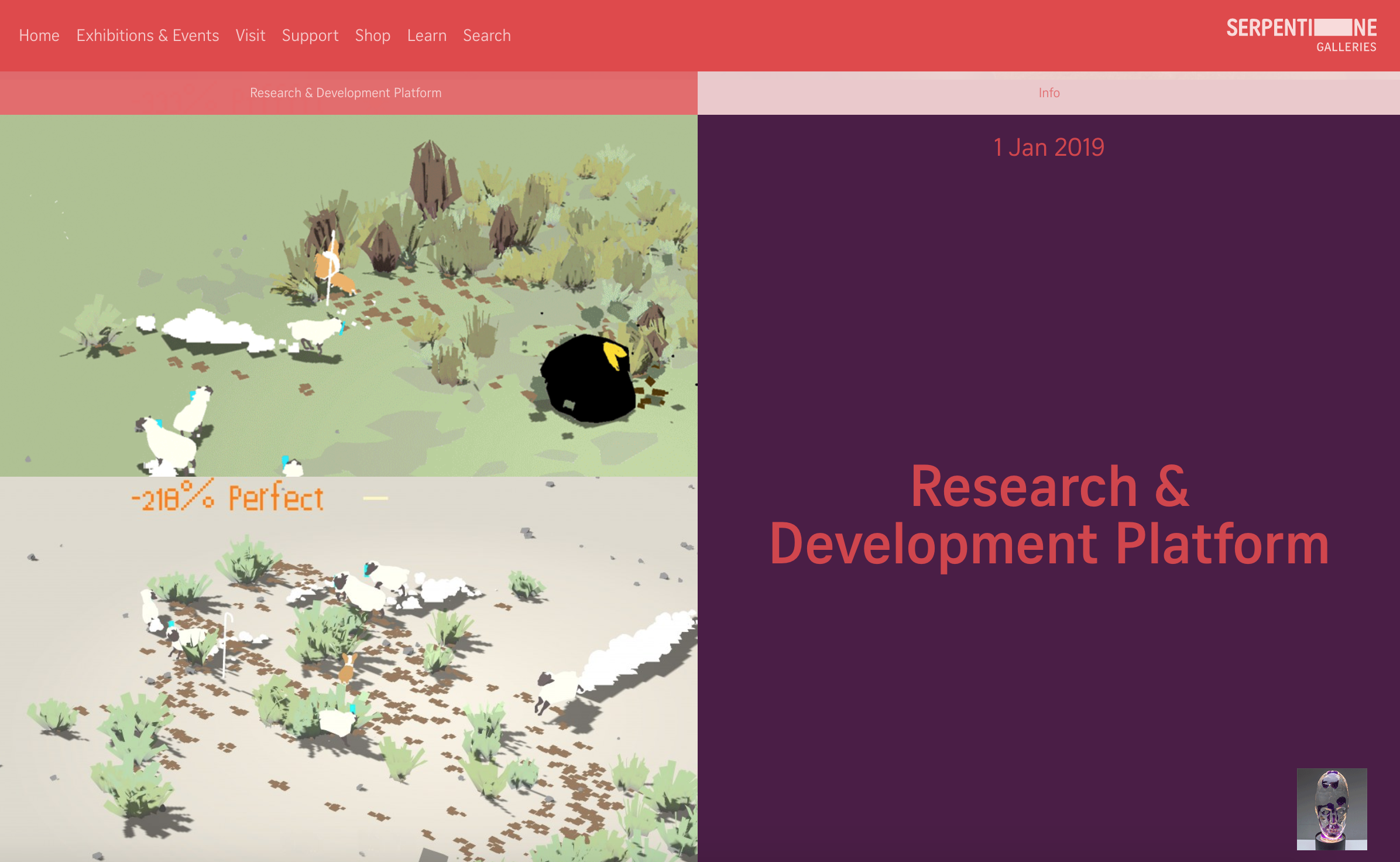
Serpentine Galleries website page featuring Ian Cheng, Bad Corgi, Digital Commission, 2015 and Jenna Sutela, I Magma, Digital Commission, 2019 for the Research & Development Platform (image still).
www.serpentinegalleries.org/exhibitions-events/research-development-platform
2. The Legal Lab
The Legal Lab was one of the first of the Serpentine’s labs to emerge in late 2018. In the beginning of 2019, I was appointed as the Principal Investigator of the Legal Lab. The title recognises that the work of the Legal Lab has many different people involved. As the Legal lab develops further, its reach will continue to expand beyond the Serpentine, to other investigators, research associates and advisors.
The role has given me the freedom to wear both of my professional ‘hats’ at once – lawyer and curator – and the opportunity to explore my research intersection of art, curating, technology and the law. It is primarily twofold in approach: firstly, to set up various methods for conducting research into legal issues in collaborative practice, specifically, collaborations across art, technology and science, and secondly, to then use that research output to develop real (not theoretical) outcomes that change the way we engage with the law in collaborations between art, technology and science. This second component is particularly unusual for an art institution. Where an art institution may once have held a panel discussion event for experts to contemplate these issues, usually with insufficient time to engage with the issues in any useful depth, the Legal Lab is driven to shift the status quo by developing and releasing real tools for change.
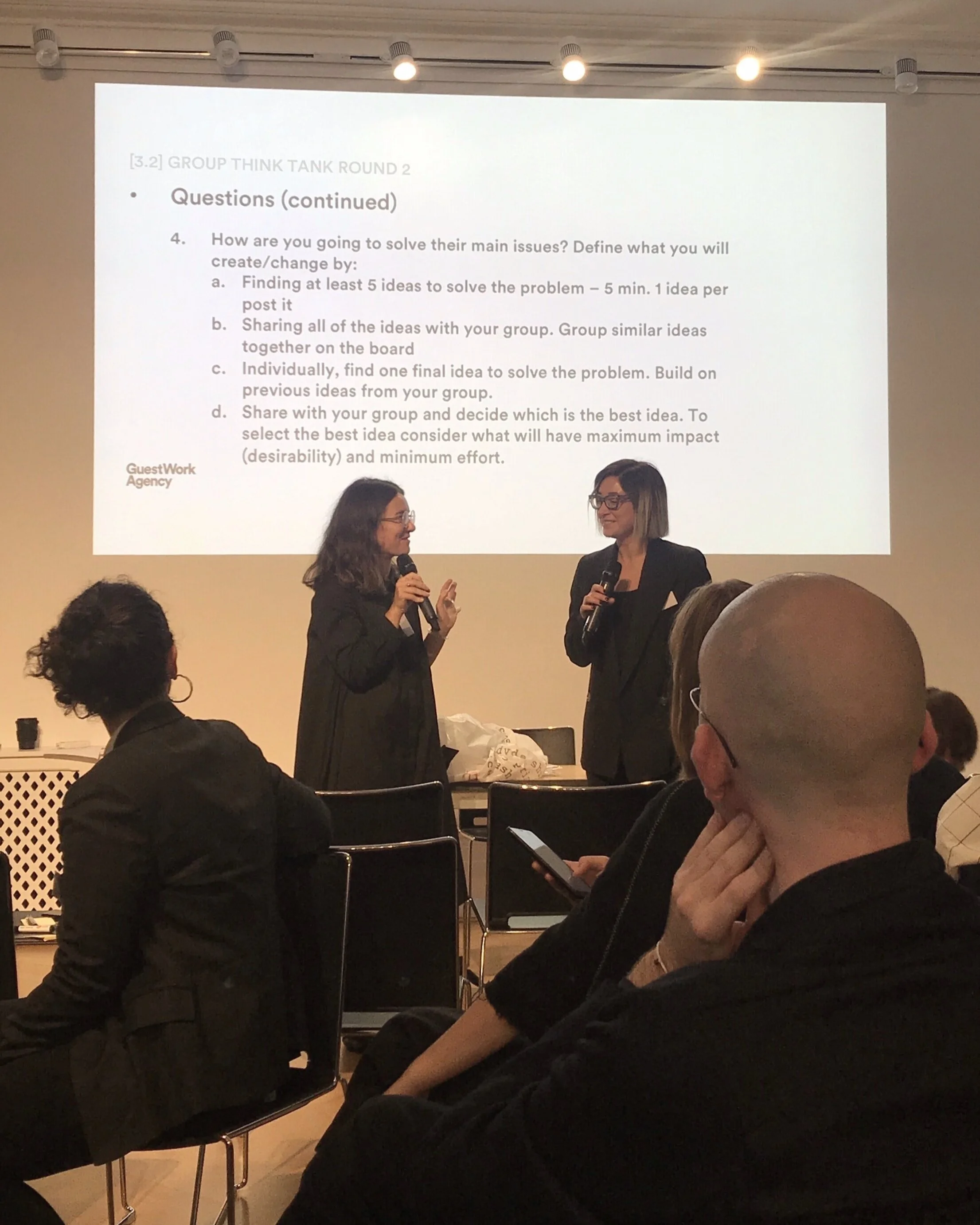
Victoria Ivanova, R&D Community Program Manager and Alana Kushnir, Principal Investigator, Serpentine Galleries R&D Platform Legal Lab at the Inaugural Legal Lab Summit, London, 1 October 2019. Photo credit: David Jenal, Legal Lab Research Associate.
3. The Inaugural Legal Lab Summit
During Frieze Week in October 2019, the Serpentine Galleries and Guest Work Agency co-hosted the first conversation space to take place as part of the Serpentine Galleries R&D Platform – the inaugural Legal Lab Summit. Approximately 40 experts were selected from a range of relevant fields to participate. These included artists working with science and/or technology (including artists who have been commissioned by the Serpentine Galleries to create digital projects), curators and other workers from art institutions with a focus on digital practice, technologists, art lawyers, legal academics specialised in art and law and legal designers. Participants were based in a range of cities from across the globe, including London, Berlin, Amsterdam, Paris, Hong Kong, Los Angeles and Melbourne.
As part of the Summit, participants were divided into think tank groups and designated hypothetical scenarios and questions to discuss. Each scenario raised a number of legal issues, from intellectual property ownership to data privacy, in the context of collaborations across art, technology and science. There were a number of particularly useful outcomes of these exercises. These included, for example:
creating a structured opportunity for the participants to meet one another and gain a better understanding of varying areas of expertise, perspectives and personal experiences, as well as participant crossovers in those varying areas;
raising awareness of the complex mixture of legal issues that collaborations across art, science and technology can raise; and
gaining a better understanding of levels of legal knowledge of participants, and gaps in legal knowledge.
The second component of the inaugural Legal Lab Summit introduced the field of legal design as a potential approach to consider in the context of the aims of the Legal Lab. While design-led thinking has been particularly influential in the context of improving people’s access to justice and the desire for law firms to innovate, it has not yet been used within the more specific context of working with artists and art institutions. To that end, Founder and CEO of legal design consultancy Amurabi, Marie Potel-Saville, was tasked with introducing the participants to the brief history and aims of legal design, and the close-knit nature of the rapidly evolving global legal design community. One of the key points made by Potel-Saville was that the law has plasticity to it. That is, although the law is traditionally seen as hard and uncompromising (particularly when applied to creative practices for instance), the law is in fact inherently capable of being shaped and moulded.
Through the use of a combination of forms of communication, including words and visual elements, the law has the potential to better accommodate the evolving nature of collaborations across art, science and technology. This understanding of the potential of the law has been useful for us to consider in relation to the Legal Lab, particularly in regards to how to shift the status quo of legal relationships in the art industry.
4. The Legal Lab Survey
To further aid our development of real tools for change, the Legal Lab is also conducting a survey focused on mapping existing legal practices in collaborations across art, technology and science. The survey is designed to be completed by both individuals and organisations whose work is relevant to the Legal Lab – be it artists, curators, technologists, arts organisations, technology companies, legal academics and so on.
The results of this survey will provide us with an important evidence-base for our future work. As part of our commitment to sharing knowledge with the cultural sector, the survey findings will be published and openly accessible to all. Is your work relevant to the Legal Lab? If so, we would appreciate your input. The Legal Lab Survey can be shared and accessed using this link: https://www.surveymonkey.de/r/GMDGJGT